When Dental Emergencies Go Unanswered
How a generic contact form and voicemail fail urgent patients—and what happens when your booking flow can tell the difference.
 See how this was solved
The Challenge
Most dental practices rely on a combination of phone calls during business hours, voicemail after hours, and a generic contact form on their website. For routine appointment requests, this works fine.
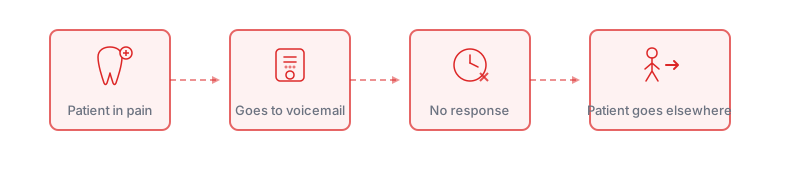
For emergency patients, this creates a critical gap. Pain doesn't wait for office hours—and neither do patients.
What Was Going Wrong
- Emergency calls went to voicemail after hours
- The website contact form treated every request the same
- No way to distinguish urgent cases from routine requests
- Staff reviewed all messages the next morning—no prioritization
- Patients often found care elsewhere before anyone called back
The Real Issue
It wasn't effort.
It was system design.
The website wasn't asking the right questions. Without a way to screen for urgency, every patient looked the same—until it was too late.
What was missing:
- No screening for urgency
- No routing based on need
- No prioritized notification to staff
A Smarter Booking Flow
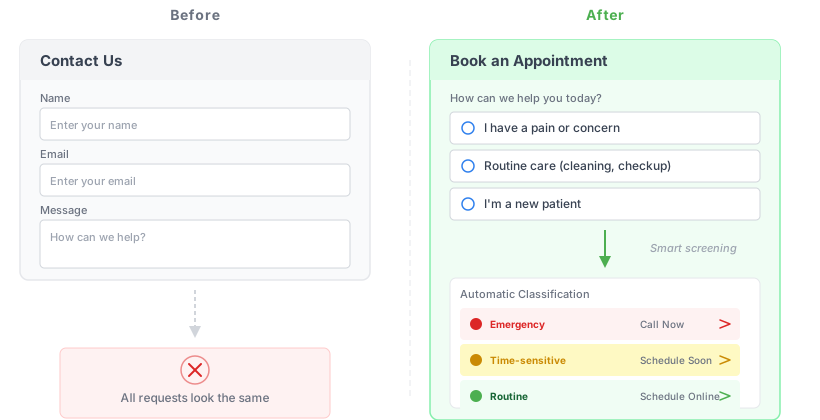
We replaced the generic contact form with a triage-enabled booking flow. Before patients reach the scheduling form, they answer a few quick questions about their situation.
The system classifies each request:
- Emergencies (pain + sudden onset, swelling, bleeding, trauma) → Directed to call now
- Time-sensitive (ongoing pain, symptoms worsening) → Prioritized for quick scheduling
- Routine (checkups, cleanings) → Standard online scheduling
How It Works
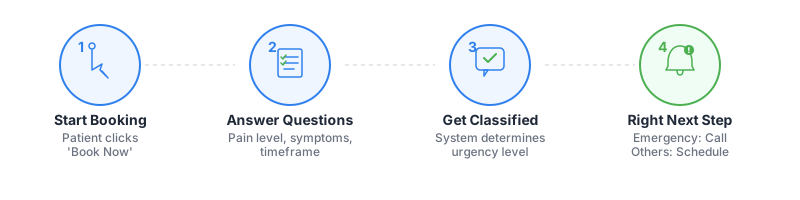
Four steps. No complexity for the patient. The right outcome for each situation.
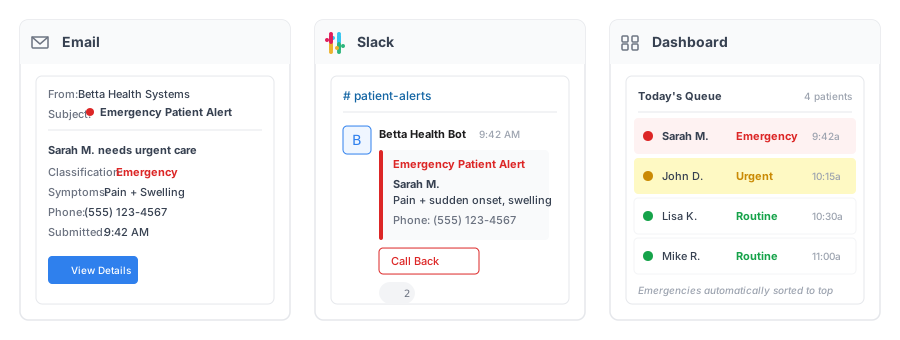
How Staff Gets Notified
When the system classifies a patient as urgent, your team knows immediately so they can act appropriately.
The Results
- Urgent patients get directed to call immediately—not buried in a queue
- Routine requests flow to online scheduling without clogging the phones
- Staff see classification and context before they respond
- Practice responds faster to the cases that matter most
- Fewer "I couldn't get through" complaints
"The booking form now does the triage. Staff just respond."
Why This Matters
Urgent patients represent high trust and urgency. They're not shopping around—they need help now. The practice that responds appropriately first wins their loyalty for years.
First response determines where they go. A patient with a cracked tooth at 9pm isn't going to wait until morning to see who calls back first. They'll find someone who responds.
A smart booking flow protects both patients and staff time. Urgent cases get routed to immediate action. Routine requests flow through scheduling. Everyone gets the right path.
Modern intake means asking the right questions—before staff gets involved.
Could This Be Happening at Your Practice?
If any of these sound familiar, your booking flow might be working against you.
- Does your booking form treat every request the same?
- Do staff manually triage messages each morning?
- Do urgent patients end up waiting in a generic queue?
- Have patients ever said, "I didn't know how to get through"?
See how a triage booking flow would work for your practice
We'll walk you through exactly how the system screens, classifies, and routes patients—so urgent cases get immediate attention and routine requests flow smoothly.